
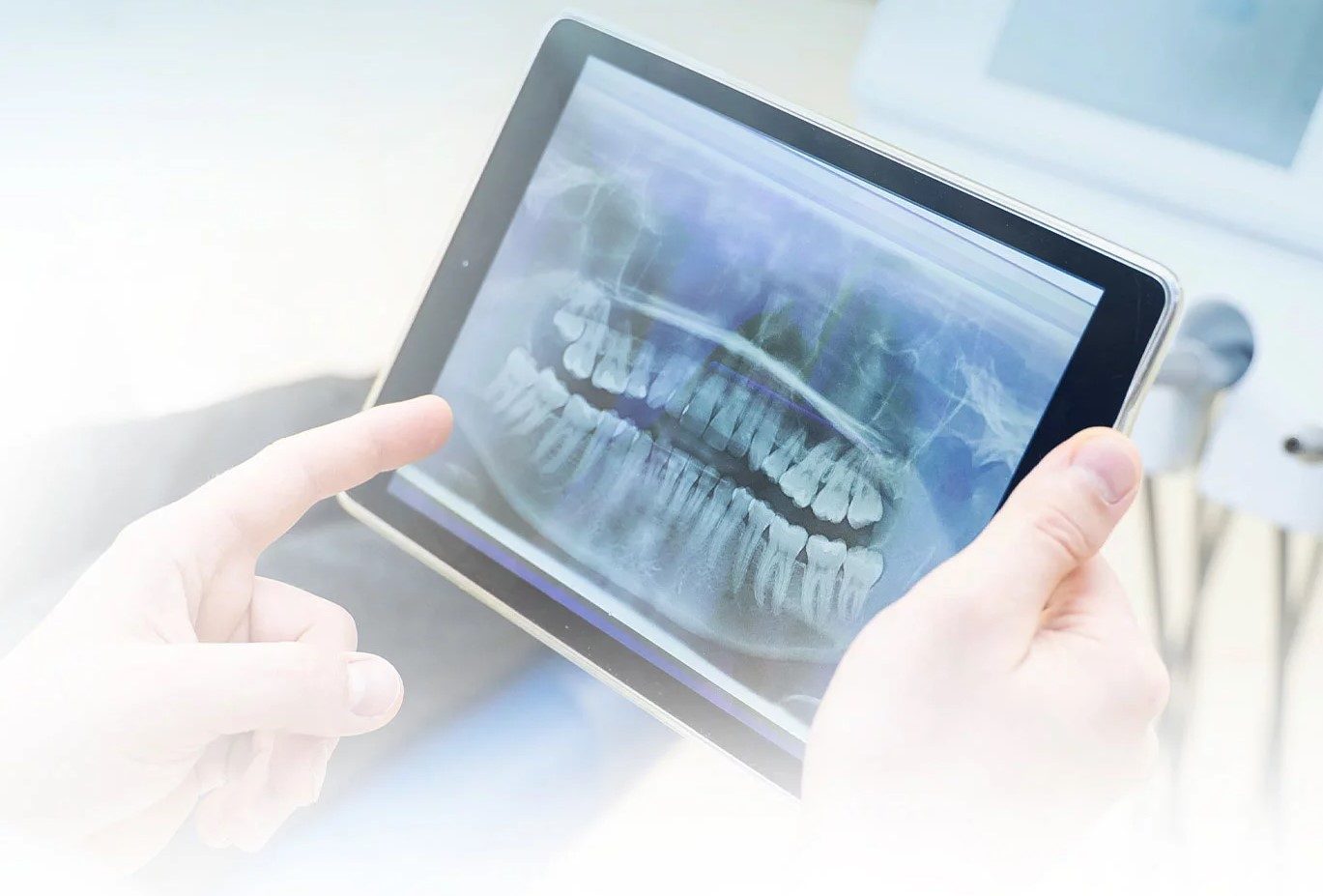
Oral and maxillofacial surgery in Munich
Gentle procedures for optimal oral and dental health
Quality oriented oral surgery procedures for a bright and healthy smile. Experienced team and state-of-the-art technology for optimal results and maximum well-being of our patients. Discover our wide range of oral surgery solutions and receive professional care from our expert team.
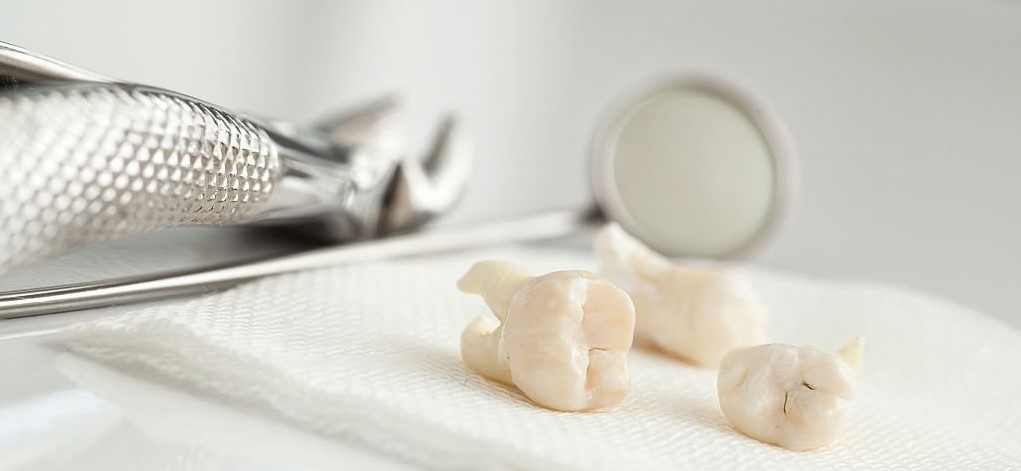
Wisdom teeth removal: procedure, reasons and process
Wisdom teeth, also known as the rearmost molars in the upper and lower jaw, develop during the growth phase and usually erupt between the ages of 19 and 30. However, it is not uncommon for wisdom teeth to need to be removed throughout life.
The most common reason for wisdom teeth removal is limited space in the jaw. Because of this, they often do not erupt completely or remain fully enclosed in the jawbone. In many cases, wisdom teeth are in an incorrect position and exert pressure or injury on adjacent teeth or the surrounding jawbone. Inflammation and infection may also result in the need to remove the tooth. Partially erupted wisdom teeth, in particular, make oral hygiene difficult, which increases the risk of bacterial buildup in the tooth area.
If the dentist recommends the removal of a wisdom tooth, the type of procedure depends on the location of the tooth. If the wisdom tooth is already fully erupted, it can be easily removed with pliers. However, if the tooth is fully or partially enclosed in the jawbone, this requires oral surgery. This involves making a small incision in the mucosa and removing the surrounding jawbone. Depending on the location of the tooth, it may be removed in whole or in pieces. After the tooth is removed, the wound is sutured and the stitches can usually be removed after about a week.
Wisdom teeth can be removed individually, in pairs or all four teeth at once. Treatment time per wisdom tooth is usually 5-10 minutes. Most procedures are performed under local anesthesia. However, for more extensive procedures or at the patient's request, it is also possible to perform the treatment under general anesthesia or twilight sleep.
You can find more information about wisdom tooth surgery here.

Root apex resection: treatment of tooth root inflammation for sustainable tooth preservation
In order to eliminate an inflammation of the tooth root and save the affected tooth, root canal treatment is often the first step. Unfortunately, this does not always lead to long-term success. In some cases, bacteria can remain in the area of the root tips despite treatment, which can lead to renewed inflammation. This inflammation may initially be asymptomatic, but over time may cause severe pain, swelling or the formation of a cyst, and therefore requires further treatment.
The solution is an apicoectomy, which is performed as part of an oral surgery procedure. In this procedure, the root tip of the tooth is removed along with the inflamed tissue. A small incision is made in the mucosa to gain access to the root tip and expose the surrounding jawbone. After removal of the root tip, the remaining root is sealed and the surrounding jawbone is cleaned. Finally, the wound is sutured. The procedure is performed on an outpatient basis under local anesthesia and is completely painless for the patient.
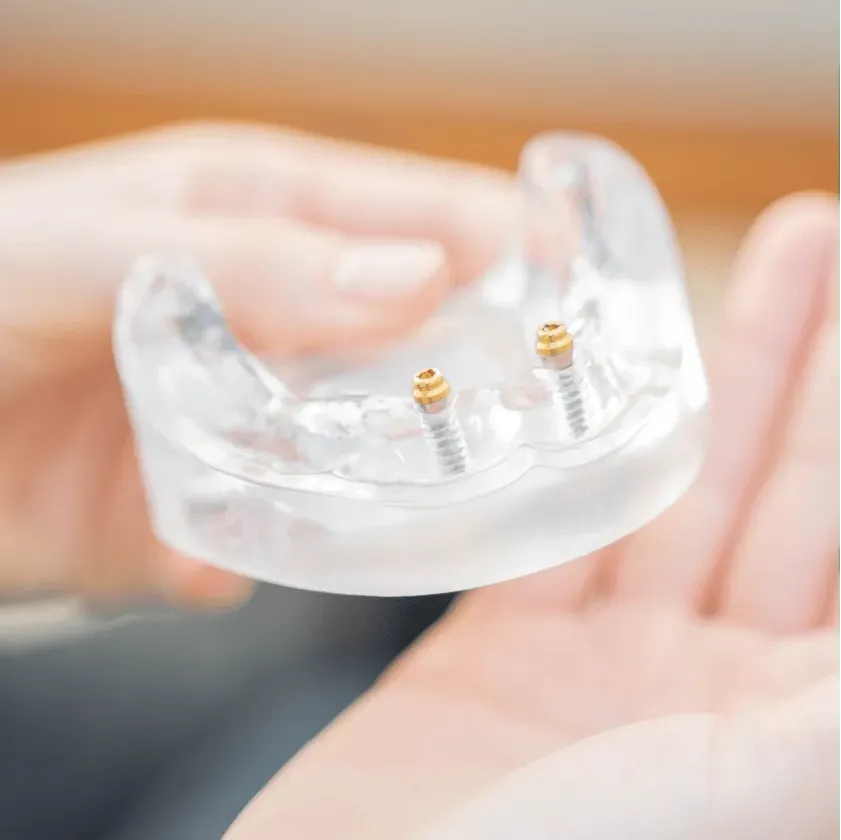
Modern implantology: Esthetic and durable dental prostheses for improved quality of life
The loss of one or more teeth not only affects appearance, but also significantly impairs the quality of life. Thanks to advances in implantology, missing teeth can now be replaced aesthetically, with high quality and in the long term.
Dental implants are considered the best solution for tooth loss. They are artificial tooth roots made of titanium or ceramic that are anchored in the jaw and fuse with the bone over time. As a result, they provide a firm and permanent base for tooth replacements such as crowns, bridges or dentures. Implants can be used for single tooth gaps as well as for complete tooth loss in the jaw.
Today, modern techniques and innovative procedures also allow implantation in cases of low bone density or bone height in the jaw. If there is insufficient bone, supportive measures such as bone augmentation and bone regeneration can be performed. As a result, implant restoration is possible in almost every patient.
Bone augmentation for stable implant placement:
Methods and techniques for jawbone regeneration.
During implantation, the existing bone material may not be sufficient to securely anchor the implant in the jawbone. In such cases, bone augmentation may be required to (re)build up the bone, also known as augmentation. This procedure can be performed in both the upper and lower jaw.
Depending on the extent and position of the bone loss, there are various ways to rebuild the jawbone. These include methods such as bone grafting as well as advanced techniques such as CAD/CAM milled bone blocks. The latter method uses 3D planning software to create a custom graft based on a three-dimensional scan of the jaw defect.
By using advanced technologies and specialized procedures, we can plan and deliver customized treatment to optimally restore the jawbone and create a stable foundation for implants. Our experts in the field of maxillofacial surgery or oral surgery are at your side to ensure successful bone regeneration.
Orthodontic surgery:
Successful treatment of malpositions for an optimal result
For misaligned teeth, orthodontic treatment is often the first choice. However, not every misalignment can be corrected by this measure alone. In such cases, a combination of surgical correction and orthodontic treatment is required to treat the misalignment successfully.
Thanks to the specialisation of our practitioners, our centre for dental, oral and maxillofacial medicine offers comprehensive advice and treatment for adults. This allows us to provide you with optimal orthodontic and maxillofacial or oral surgical care.
Exposure of displaced teeth: correction of teeth that have developed at an angle in the jaw
Displaced teeth are teeth that have developed at an angle in the jaw. This often happens with wisdom teeth, but can also occur with other teeth. Displaced teeth can damage the surrounding teeth, as they often press against their roots. These teeth are frequently also retained, i.e. they have not erupted within the expected period. Maxillofacial or oral surgical procedures can expose these teeth and bring them into the correct position.
Correction of the lip and tongue frenulum: adjustment of frenula that are too short or too tight
Sometimes a maxillofacial or oral surgical procedure is necessary if the lip or tongue frenulum is too short or too tight. Depending on the initial situation, the frenula can be gently shortened, lengthened or removed completely to achieve optimal function and aesthetics.
PA surgery (periodontal surgery):
Effective treatment of gum disease for healthy oral health
PA surgery, also known as periodontal surgery, is dedicated to treating gum disease to ensure optimal oral health. Periodontal disease, such as gingivitis and periodontitis, can lead to serious problems, including tooth loss and bone loss. Timely and effective treatment is critical to stop these diseases and prevent progression.
At our dental office in Munich, Germany, we offer specialized PA surgery to provide our patients with the best possible care. Our experienced surgeons have in-depth expertise and use state-of-the-art techniques to treat gum disease and restore periodontal health.
PA surgery involves a variety of procedures, including correcting gum recession, removing inflamed tissue, reshaping the gums and cleaning root surfaces. Advanced periodontitis may also require bone regeneration or bone grafting to compensate for bone loss.
Dental Traumatology:
Immediate care of dental injuries for tooth preservation.
Dental traumatology deals with injuries to the teeth and periodontium, which are often caused by accidents and falls. Children and adolescents in particular are often affected by sports-related injuries. Such injuries can cause damage to the crown and root of the tooth as well as the periodontium, gums and jawbone.
Prompt oral or maxillofacial surgical treatment is of utmost importance when a dental injury occurs. With quick and competent action, damaged or knocked-out teeth can often still be saved. In addition, close follow-up of dental injuries is of great importance, as the effects of the trauma can sometimes show up with a time delay.
Especially for people who are active in sports, we recommend the purchase of a tooth rescue box, which is available in pharmacies. In such a box, a broken piece of tooth or a knocked-out tooth can be properly stored until one visits the oral surgery or maxillofacial surgery specialist. This measure can help to preserve the tooth in the best possible way and improve the chances of successful treatment.
Frequently asked questions
Wisdom teeth
Implants